Every habit builds part of the process. Tap one to see how — and the myths behind it.
Early morning
Morning work
Afternoon work
Evening
Wind down
6 AM
Water first: lemon and ginger
You've just gone 7–8 hours without water. Warm water with lemon and ginger is a gentle restart — it hydrates, even if it doesn't “detox”. Keep the honey to a teaspoon, or skip it.
BuildsPhysical healthHabits
6:30 AM
Exercise
Do the hard thing first, before the day's decisions and distractions pile up — mornings make it easiest. A workout then gives your focus and self-control a lift, and holding a plank a little longer than you'd like trains your mind to keep going. Even 20 minutes changes the whole day.
After a workout your muscles are ready to rebuild. A plant-based shake with 20–30g of protein does the job. Pick a brand that's been independently lab-tested — labels don't always match what's inside.
Protein first, then fruit. The shake starts the repair, the fruit refills the energy you just used, and having protein first keeps the sugar rise smaller. Papaya, pomegranate, custard apple — whatever's in season, one at a time.
BuildsPhysical health
9 AM
No phone while working or studying
Every notification breaks focus, and getting back takes far longer than the glance. In Gloria Mark's research at UC Irvine, interrupted work took about 23 minutes on average to get back to — usually with two other tasks squeezed in between. Phone in another room, notifications off.
BuildsDeep workAttention spanDisciplineSpiritual health
10:30 AM
Breakfast, with protein
Make breakfast a protein meal too: paneer, tofu, soya chunks or Greek yogurt, with besan or dal on the side. One primary protein in every meal is the simplest rule there is. Phone away here too — the day's first round of mindful eating.
Sip between meals, not only when you're thirsty — tiredness often shows up before thirst does. Between breakfast and lunch it's just water: that gap is when your gut cleans up.
Make lunch the big plate of the day: vegetables, raw or cooked, with a protein source like dal, paneer, tofu or curd — vegetables first. If raw salads feel heavy at night, lunch is their slot. Practise mindful eating: no scrolling, no eyes on a screen — distracted eating makes you eat more, now and later.
A glass of chaas made from fresh curd, with jeera and a pinch of salt. It's a fermented food — the kind a Stanford trial linked to a more varied gut. Homemade is the surest bet; not every packaged buttermilk still has live cultures.
BuildsPhysical health
3 PM
Post-lunch walk
Lunch at 2:30 PM, then 10–15 minutes on your feet. A short walk soon after a meal helps digestion and steadies blood sugar. Working on your belly? Walk after every meal — regular walking is what shrinks deep belly fat over time.
BuildsPhysical health
3:30 PM
No phone, afternoon focus block
The post-lunch dip is when the phone feels most tempting. One task, phone away until 5 PM — your social media slot comes at 7 PM.
BuildsDeep workAttention spanDisciplineSpiritual health
5 PM
Water, afternoon refill
Even mild dehydration can leave you tired and less focused. Drink now rather than catching up late at night, when it means trips to the bathroom instead of sleep.
BuildsPhysical health
6 PM
Seasonal fruit
About two hours before dinner. It takes the edge off hunger, so dinner stays light. Eat it whole, not as juice — the fibre is the point.
BuildsPhysical health
6:15 PM
Creative time
Instead of resisting the urge to check your phone, give the evening a better plan: enrol in something physical like dance, something creative like music, art or theatre, or learn a new language — or try an open mic. Make something instead of scrolling something.
BuildsSocial healthIntellectual healthDiscipline
7 PM
Social media, one window a day
Same time, same place, every day — say 20 minutes on the sofa, with a timer on. Not in bed, not at your desk. When the timer rings, you're done. On a schedule, social media is a choice; every spare minute, it's doom-scrolling.
Dinner at 8 PM, built around a protein source — paneer, tofu, soya, dal or curd. Momentum isn't just for investing: a protein source in every meal keeps the day's intake building, and your muscles repair overnight. Phone away while you eat — mindful eating helps you notice when you're full.
Start within about 30 minutes of finishing dinner — that's when blood sugar is rising. 15 minutes is plenty. Working on your belly? With the post-lunch walk, that's about 3 hours of walking a week — the kind of regular aerobic exercise that trims deep belly fat.
BuildsPhysical health
9 PM
Phone off, or in another room
Screens late at night push back sleep. Switch it off or leave it charging in another room — deep sleep starts here, not at bedtime.
Ten minutes with pen and paper. Look back: three things from today you're grateful for. Look ahead: tomorrow's to-do list, as specific as you can make it. Once it's on paper, your mind doesn't have to keep holding it.
BuildsMental healthSpiritual health
10:30 PM
Sleep
Deep sleep is where memory and repair happen. 10:30 PM to 6 AM is 7.5 hours — keep the same times every day, weekends included.
▶did you know Switching tasks leaves part of your mind behind
When people switched to a new task before finishing the first, part of their attention stayed stuck on the old one — researcher Sophie Leroy calls it attention residue — and they did worse on the next task. Finish what you can before switching. If you must stop, jot down where you'll pick up: a quick “ready to resume” note helps clear the residue.
Habits
How long does a habit take to stick?
Longer than you've been told — and one missed day doesn't break it.
⚠ Myths we bust first
▶myth "It takes 21 days to build a habit"
When researchers followed 96 people building a new daily habit — like drinking water with lunch or a short run before dinner — it took about 66 days on average to feel automatic, and anywhere from 18 to 254 days. The good news: missing a single day didn't break it.
📅Give a new habit two months, not three weeks. Missed a day? Pick it up the next.
▶myth "I'll catch up on sleep over the weekend"
Your body clock runs on routine. Walker's number one tip is regularity: go to bed and wake up at the same time every day, weekends included. Sleeping in on Sunday shifts your clock — which is why Monday morning feels like jet lag. A 2019 study also found that weekend lie-ins didn't undo the metabolic effects of short weeknight sleep.
⏰Sleep isn't a bank account you can top up on Sunday. Same time to bed, same time up — that's the habit.
Every interruption chips away at it; every focused block builds it back.
✨ Did you know?
▶did you know Just hearing a notification breaks your focus
In a Florida State study, people doing a focus task made more mistakes when their phone buzzed with a call or text — even though they never picked it up. The distraction was about as big as actually using the phone. That's why notifications go off and the phone goes out of reach.
▶did you know One workout gives your focus a lift
When researchers pooled 79 studies, a single bout of exercise gave a small but reliable boost to attention and thinking — during the workout, right after it, and even a while later. Small daily lifts add up: one more reason to move before you sit down to work.
Health · Physical
What does my body actually need?
Protein, digestion, movement and recovery — the myths that trip people up, and the facts that help.
⚠ Myths we bust first
▶myth "Rajma and chole are my protein sources"
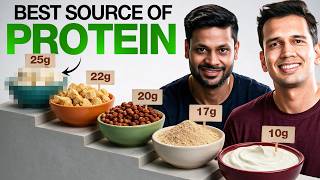
They do have protein — but they have far more carbs. Per 100g (dry): rajma has ~24g protein and ~60g carbs. Chole has ~19g protein and ~61g carbs. Soya chunks have ~52g protein and ~33g carbs.
To get 20g of protein, you'd eat ~85g of dry rajma (carrying ~50g of carbs) or ~105g of chole (~63g of carbs) — or just ~40g of soya chunks (~13g of carbs).
⚖️Rich in protein ≠ a protein source. Check the ratio: how much protein you get for every gram of carbs. Keep rajma and chole on your plate — just pair them with a primary source like soya, high-protein paneer, tofu or Greek yogurt.
▶myth "Peanuts and peanut butter are high-protein foods"
100g of peanuts has ~26g protein — and ~49g fat, close to 570 calories. To get 20g of protein from peanuts, you'd also take in ~38g of fat and ~440 calories. That's a fat source with some protein, not a protein source.
🥜A great snack, a poor protein plan. Count peanuts as healthy fat, not as your protein for the day.
▶myth "Soya raises estrogen — men should avoid it"
Soya contains isoflavones — plant compounds that look a little like estrogen, which is where the fear comes from. But when researchers pooled clinical trials on men, soya at normal food amounts showed no meaningful effect on testosterone or estrogen levels.
💪The fear is louder than the evidence. Soya chunks are ranked #1 in the video — ~52g protein per 100g, and one of the most affordable protein sources in India.
▶myth "Small meals every 2 hours keep digestion going"
Your small intestine has a built-in cleaning crew — the migrating motor complex. It sweeps leftover food and debris along, but it only switches on when your gut is empty. Every snack hits pause. The video's advice: space meals 4–5 hours apart, and skip the all-day grazing in between.
🧹Your gut cleans up between meals, not during them. Snack all day and it never gets the chance.
No drink “flushes out toxins”. Your liver and kidneys do that job all day, every day, and a healthy body doesn't need a glass of anything to help. What morning lemon water really does is simpler: it's water, after 7–8 hours of none. Ginger may help settle your stomach, and lemon adds a little vitamin C.
💧Drink it because it hydrates, not because it detoxes. Lemon is acidic, so rinse with plain water afterwards and wait 30–60 minutes before brushing your teeth.
▶myth "Eat fruit only on an empty stomach — after a meal it rots in your gut"
This comes from “food combining” diets, and the evidence isn't there. Your stomach is strongly acidic and mixes everything you eat — fruit doesn't sit on top of a meal and rot. A 2000 trial comparing a food-combining diet with a regular balanced one found it gave no extra weight loss. If anything, fruit after protein is a good pairing: protein first tends to make the sugar rise from the fruit smaller.
🥭Fruit after a meal is fine. After a protein shake it's even better — the shake starts the repair, the fruit refills the energy you just spent.
✨ Did you know?
▶did you know Protein at dinner keeps working while you sleep
Your muscles repair overnight, using the protein from your last meals. In a 12-week study, young men who had a protein drink before bed while strength training gained more strength and muscle than those who had a placebo. They also ate more protein overall, so the takeaway is simple: protein in every meal, dinner included — not just at breakfast.
▶did you know Your gut runs on a clock — and it slows down at night
Digestion works best during the day and winds down after dark. A late, heavy dinner keeps your gut busy when your body wants to repair. Eating within a 10–12 hour window gives it the night off — this day stays close, eating between 7:30 AM and 8 PM and sleeping at 10:30 PM.
▶did you know Your masala box counts — your gut wants 30 plants a week
Gut bacteria thrive on variety more than on any single superfood. The video suggests 30+ different plant foods a week — and herbs, spices, nuts and seeds all count. Jeera, haldi, ajwain, methi, dhaniya: an Indian kitchen gets you there faster than you think. Changing your fruit with the season adds to the count too.
▶did you know Fermented foods made gut bacteria more varied in 10 weeks
In a small Stanford trial, 36 healthy adults added either fermented foods — yogurt, kefir, kimchi and similar — or extra fibre for 10 weeks. The fermented-food group ended up with more varied gut bacteria and lower levels of 19 inflammation markers; the fibre group didn't see the same change. Chaas made from fresh curd is a fermented food too — though the volunteers built up to several servings a day, so one glass is a start, not a cure.
▶did you know A short walk after a meal shrinks the sugar spike
While you move, your muscles burn sugar as fuel. In studies, people who broke up sitting with light walks of just 2–5 minutes had a smaller blood-sugar rise after eating than people who sat still. In a trial with people with type 2 diabetes, a 10-minute walk after each meal worked better than one 30-minute walk at another time of day. That's why this day has two walks: after lunch and after dinner. Keep it up and it adds up: in trials, regular aerobic exercise like walking shrank the deep belly fat around the organs — even without dieting.
▶did you know One 4-hour night cut cancer-fighting cell activity by ~70%
Natural killer cells are the part of your immune system that hunts down abnormal cells, including cancer cells. In the research Walker shares, just one night of 4 hours' sleep led to a ~70% drop in their activity. One night.
▶did you know Your body has to cool down before it can fall asleep
To start sleeping, your core body temperature needs to drop by about 1°C. That's why you fall asleep faster in a cool room than in a hot one. Walker's tip #2: keep the bedroom around 18°C.
Mental toughness isn't a personality type. It's trained — one hard thing at a time.
✨ Did you know?
▶did you know A plank trains your mind as much as your abs
Dr. Joe Risser has spent 40+ years in clinical research and teaches preventive medicine at UC San Diego. In this TEDx talk he shows how anyone can build mental toughness — and his tool of choice is the humble plank. He connects exercise, pain and BDNF (a protein that helps brain cells grow) to explain why doing hard things on purpose changes you.
▶did you know Your brain has a region linked to tenacity
Neuroscientists link the anterior mid-cingulate cortex to tenacity — pushing on when something is hard. It tends to be thicker in "super-agers": people in their 80s with the memory of someone decades younger.
▶did you know Writing tomorrow's to-do list helped people fall asleep faster
In a sleep-lab study, 57 young adults spent 5 minutes before bed writing either tomorrow's to-do list or a list of what they'd already finished. The to-do group fell asleep about 9 minutes faster — and the more specific their list, the faster they fell asleep. Once tomorrow is on paper, your mind can stop rehearsing it.
▶did you know Cutting social media to 30 minutes a day lifted mood
In a University of Pennsylvania experiment, 143 students either kept scrolling as usual or limited Facebook, Instagram and Snapchat to 10 minutes each a day. After three weeks, the limited group felt less lonely and less depressed — especially those who started out feeling lowest. Nobody quit social media; they just put a fence around it.
Moving, making music and laughing together does something scrolling alone can't.
✨ Did you know?
▶did you know Dancing in sync with others builds closeness
In an Oxford study of 264 teenagers dancing in small groups, moving in sync and working up a sweat each made people feel closer to their group — and raised their pain tolerance, a sign of feel-good endorphins. Doing both together worked best. A dance or music class gives you that; scrolling alone doesn't.
Health · Spiritual
Do I need to sit still to meditate?
Ten quiet minutes help. The bigger practice is how you spend the other sixteen hours — with attention and gratitude.
⚠ Myth we bust first
▶myth "I can't sit still for meditation, so mindfulness isn't for me"
You don't have to sit cross-legged with your eyes closed. Doing one thing with your full attention — eating without a screen, working on a single task, walking without earphones — is mindfulness too. Researchers call it informal practice. In one study, students who washed dishes mindfully, noticing the warm water and the smell of the soap, felt less nervous and more inspired afterwards than students who just washed them.
🧘Meditation isn't a 10-minute appointment; it's how you do the rest of the day. Every phone-free block on this page is practice — no app, no cushion needed.
✨ Did you know?
▶did you know Grateful people tend to sleep better
In a survey of 401 adults, people who felt more grateful slept longer and better and fell asleep faster — largely because they had fewer worrying thoughts at bedtime and more positive ones. It shows a link, not proof, but three lines about what went well today costs nothing to try.
Health · Intellectual
How do I keep my mind growing?
Read deeply, learn something hard, and sleep on it.
⚠ Myth we bust first
▶myth "An all-nighter before the exam means more studying"
In Walker's study, one group slept a full night and the other stayed awake. Then both tried to learn new facts. The sleep-deprived group showed a 40% deficit in their brain's ability to make new memories. And it's sleep after learning that moves those memories into long-term storage.
📚Sleep before learning gets your brain ready to absorb. Sleep after learning hits the save button. An all-nighter skips both.
▶did you know Learning a hard new skill sharpened memory
In a three-month study, adults over 60 who learned demanding new skills — digital photography or quilting — improved their memory more than people who joined a social club or did easy, familiar activities. A year later, the gains were still there. The challenge is what does it, so pick something you can't do yet.
▶did you know Book readers lived almost two years longer
In a 12-year Yale study of 3,635 adults over 50, people who read books lived almost two years longer than people who didn't — even after accounting for health, wealth and education. Books beat newspapers and magazines; the researchers credit the deeper engagement a book demands. It's a link, not proof — but a strong one.
Discipline
Is willpower something you're born with?
We talk about willpower like a talent — some people have it, some don't. Science says it behaves more like a skill.
⚠ Myth we bust first
▶myth "Willpower is a battery — it runs out by evening"
This idea, called ego depletion, was famous for years. Then in 2016, 23 labs repeated the classic experiment with over 2,000 people — and found almost no effect. Other research found that people who believed willpower runs out tired faster than people who didn't.
🔋Your willpower isn't a fixed tank. How you think about it changes how long it lasts.
✨ Did you know?
▶did you know People with the most willpower use it the least
In a study that tracked people's temptations through the day, those with the most self-control reported running into fewer temptations — and resisted less often, not more. Their secret isn't a stronger brake. It's routines that keep temptation out of reach. That's the idea behind a phone-free desk, an evening class and one fixed slot for social media: decide once, instead of fighting your phone every few minutes.
Ready to replace doom-scrolling with something that compounds?
I conduct sessions for students and young professionals on building habit systems, beating distraction, and designing a process-driven life. No motivational fluff — just frameworks that work.


Why do other people matter for my health?
Moving, making music and laughing together does something scrolling alone can't.
▶did you know Dancing in sync with others builds closeness